Traditional Japanese Festivals
The creators of Guardians of Azuma expressed a wish to invest the game with as many of the traditions of Japan as possible.
Japan of course has diverse spiritual as well as mundane cultures and each has had its own special influence through the centuries but the Japanese managed to create a very unique synthesis finally between some of its native religions and beliefs rather than continuing to perceive other belief systems as a hostile or corrupting threat.
I am not an expert in Shinto beliefs but I studied and taught comparative religion and legends and to me, Guardians of Azuma enshrines Shintoism far more than any other belief system. Although Buddhism has played a large part in shaping the culture and aesthetics of religious art and rituals, the animism that is so much a part of Shinto beliefs is very apparent the world of Guardians of Azuma. Thus, the reverence shown to Ulalaka’s sacred cherry tree that is displayed at the very beginning of this game and the kamiwaza of the taiko drum set the tone for the entire spiritual landscape of Azuma.
The one aspect of Guardians of Azuma that is alien to this ancient belief system but always has been an important part of any Rune Factory story is the ‘divine machine’ represented by Mihoshi Habaki. It is not my favourite part of the game but it adds another dimension to this multi-faceted universe and it definitely places this game in an our own era where AI is becoming increasingly powerful.
I have to acknowledge that the Japanese fascination and experimentation with robotics and other sophisticated devices has been apparent for centuries. It is nothing new. Thus, Cuilang as an extremely sophisticated ‘machine’ who, like Pinocchio aspires to become fully human and whom you can marry is very Japanese and very much a Rune Factory element. Moreover, the sophisticated machine monsters like the Cannons and Mikoshis are rather wonderful in their way.
Having written guides for the very early Harvest Moon games, I always was impressed and thrilled by the Japanese festivals that were included in the calendar. Much of the romance in any Harvest Moon game was experienced against the backdrop of a traditional festival. One might be able to experience the festival alone but when one was able to invite some one special in order to experience the festival together, those were some of the most beautiful moments in Harvest Moon and then Rune Factory.
In Guardians of Azuma, some of the festival events will not occur if one has not invited some one. How an individual responds to the festival event will tell you a great deal about his or her character.
Once you are married, there obviously is no option to attend any festival with a character other than your spouse. What makes this game unique, however, is the ability to go to the Orb at the Fateweaver Island to pause your marriage or ‘fate’ and return to Azuma single. You need not begin a new game to experience and save multiple lives with two children allowed for each.
You can do this the day before your birthday as well. If you are married on the day of your birthday, you will receive a gift from Woolby, and one from your spouse, but most of the characters will not acknowledge this ‘festival’ at all. One or two other congratulatory messages with gifts is all you will receive.
I now make it a practice to go to the orb on the day before my birthday to relinquish my marriage. I return to Azuma footloose and fancy free and awaken on my birthday with the other futons gone,* prepared for a huge day of congratulations and celebrations. And that is what occurs. Most of the gifts are rare gems. A couple will be Giant Golden Crops. Sadly, a couple of less discerning characters offer a fish dish instead but they ALL wish me a happy birthday and give a gift! After hitting up the last individual for a gift, I immediately return to the Orb to restore my married fate, having spent less than a full day as a single woman.
*One futon for you and one for your spouse with smaller ones for each of your children, all placed side by side in the Shrine.
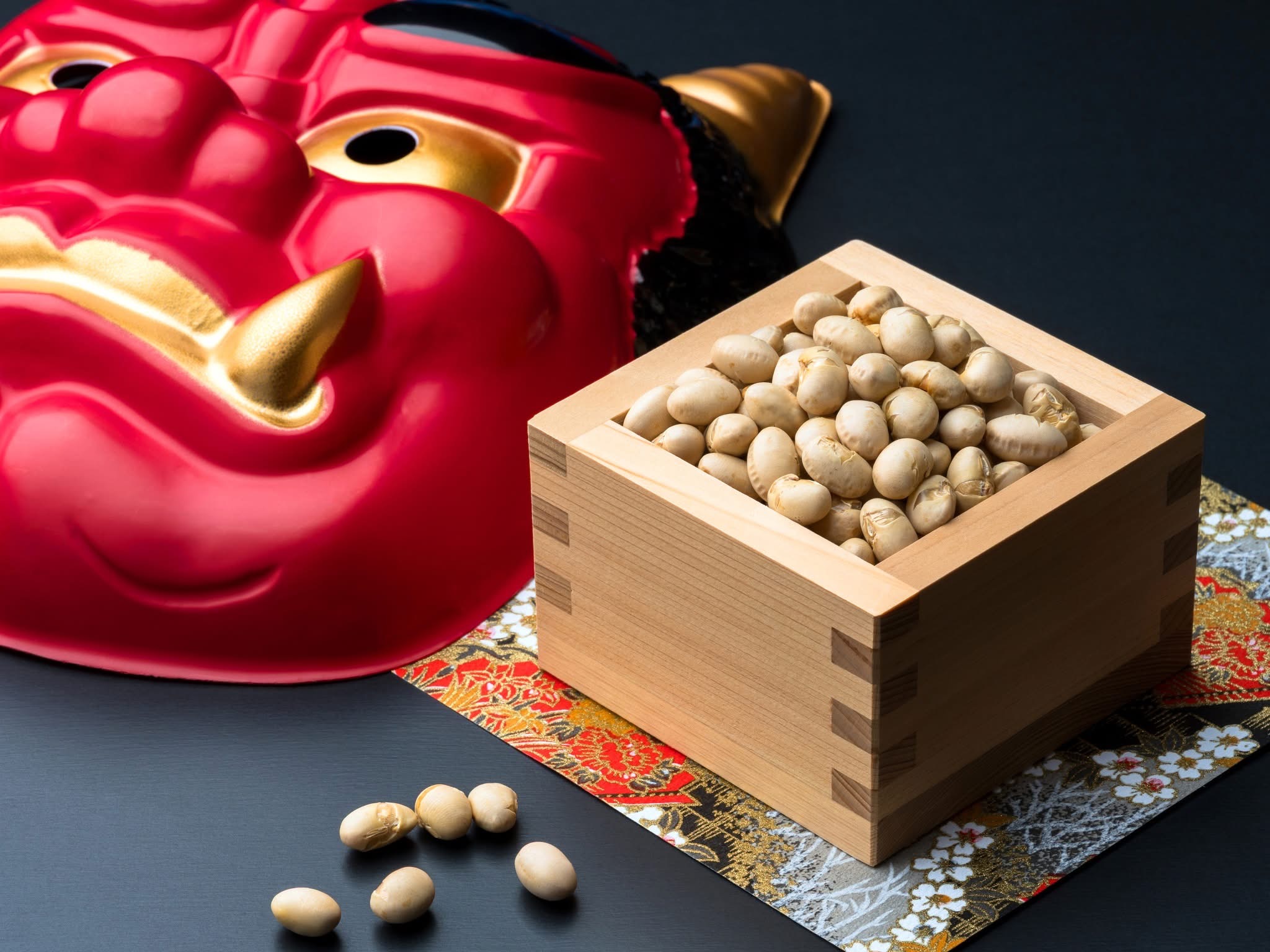
In early February, the festival of Setsubon is celebrated in Japan to mark the transition between Winter and Spring.
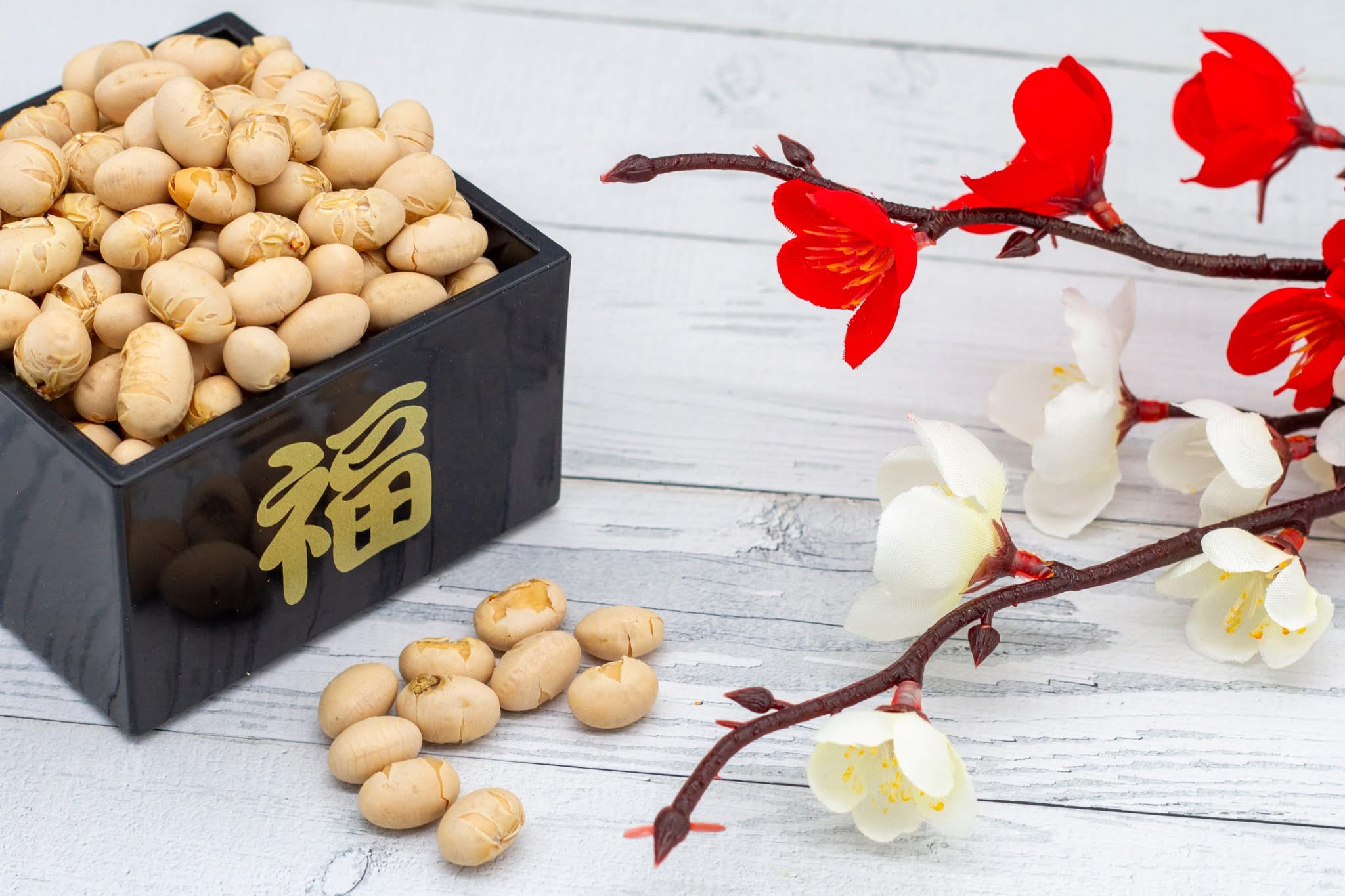
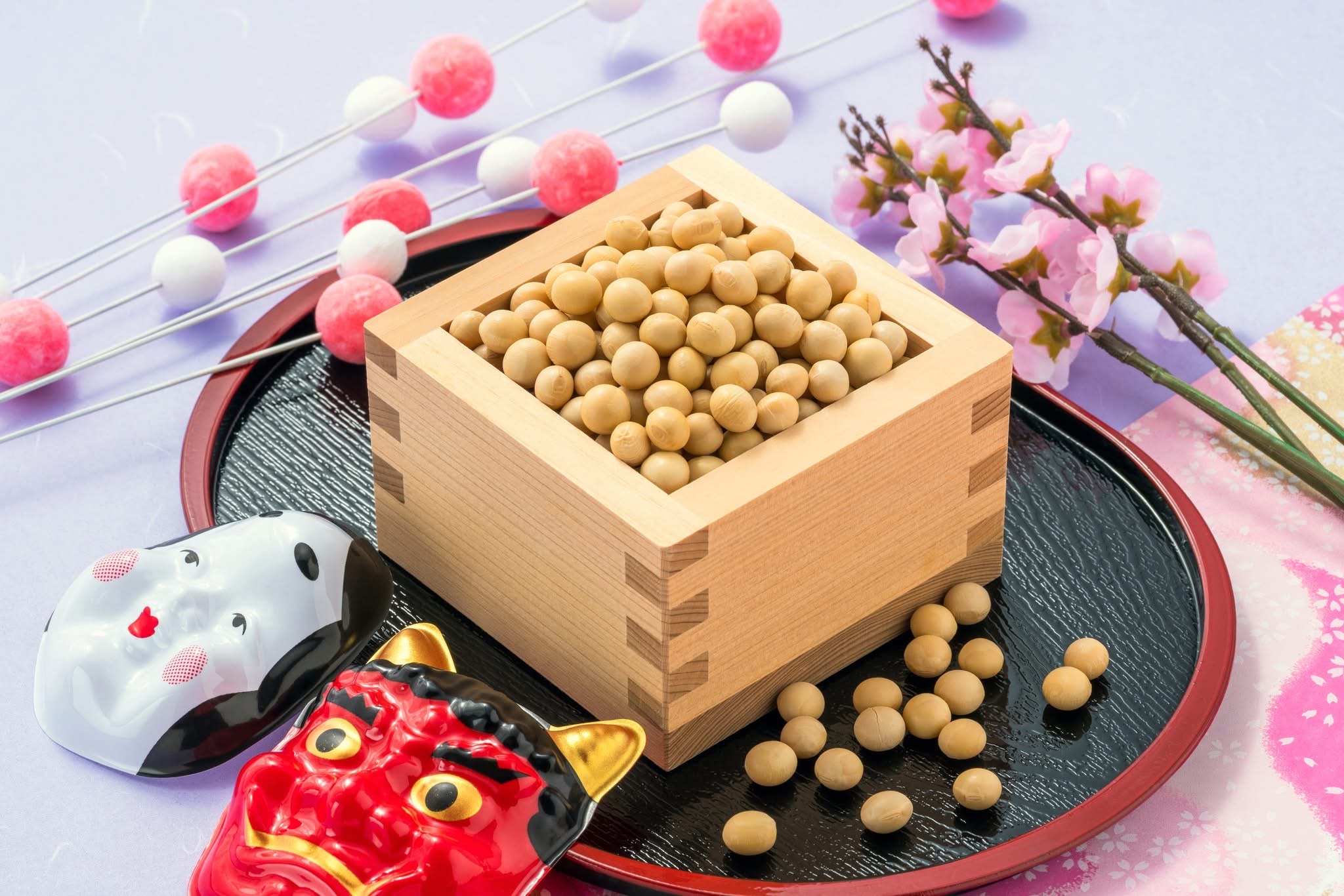
One of its highlights is Mamemaki where roasted soy beans are scattered to ward off evil spirits and bring good fortune.
Oni masques often are worn and when the beans are thrown, there are shouts of: ‘Oni wa Soto! Fuku wa Uchi!’ This translates as ‘ Oni out! Good fortune in!’
Does this sound familiar even if you never attended Setsubon? It should! In Guardians of Azuma, the children are playing and need a target to practice throwing beans. Kurama refuses but Kai, ever good humoured, volunteers under your influence and has fun with them. This is the first time you see his handsome face, when a bean hits him in the eye and he removes his masque for a moment.
He chooses to see the declaration, not as hostile, but as inspiration for the Oni to emerge from the darkness of the Underworld into the sunlight on the surface.
There are so many traditional Festivals in this game. Another one is the Mikoshi Festival. Again, it is Kai who insists that you find the chariots and bring them to the square for the event while Kurama attempts to forbid it, knowing it will restore a little of his power by forcing him out of hiding.
Matsuri celebrates the Bon Festival to bring peace to uneasy ghosts like the Grudge Knight. She also attempts to build a traditional tower that she hopes will reach all the way to heaven.
Rather like other myths that are universal, making a tower that is too high, coming altogether too close to heaven, never ends well. In this case, it is Matsuri’s own desire to test the tower’s strength against her own that brings it crashing to the ground.
The above are linked to specific Events in the game that move the story forward and are not celebrated again even though they are celebrated annually in Japan.
Annual festivals in Azuma include the following:
In Azuma, the Lantern Festival is held in the Autumn Village. You can invite some one to help you set your lanterns in moving water to communicate with loved ones.
The Tanabata Festival or Star Festival is sponsored by Kanata once you have brought peace to Azuma. Wishes are written on strips of paper to be hung upon bamboo and you help by completing three wishes. The story of Tanabata is a tale of Star-crossed lovers, the deities Orihime and Hikoboshi who are now to meet only once each year in the Milky Way
(Players of Animal Crossing will recognise the bamboo ‘tree’ with its strips of coloured paper on it as it is featured as a seasonal item in that series. You can purchase the item known as ‘Bamboo Grass’ and interact with it when placed to see wishes made by random villagers. In Azuma, you will see it on the beach only on the night of the festival.)
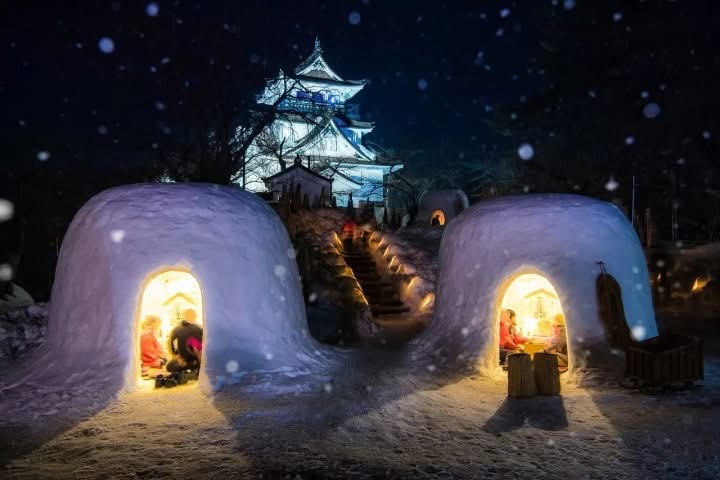
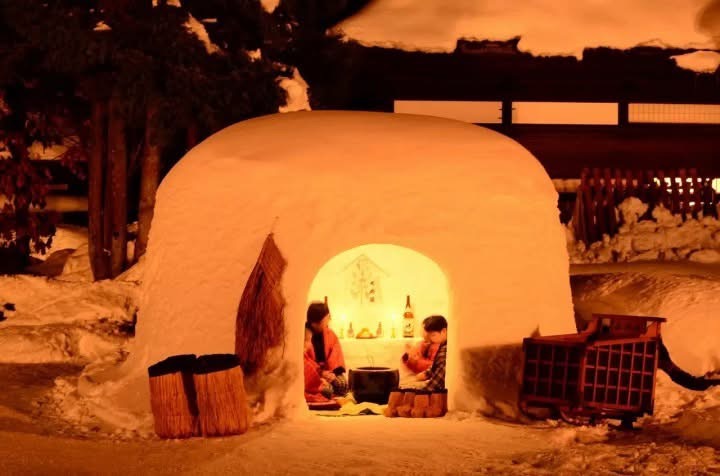
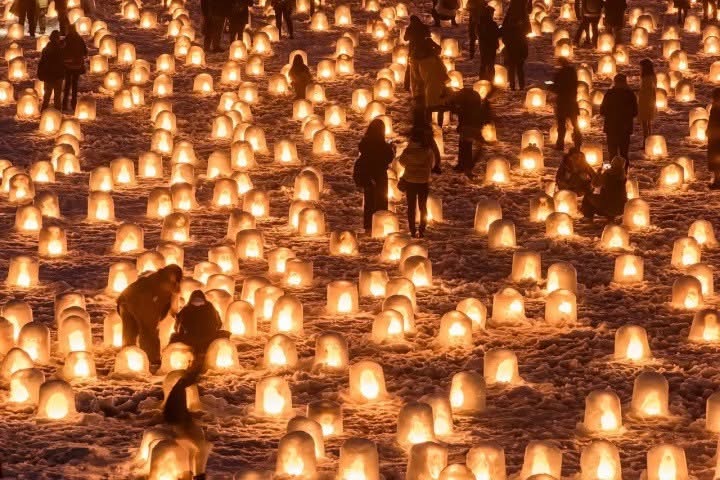
I was unfamiliar with another Japanese festival celebrated in the Winter Village on 24 Winter in Azuma. This is the Yokote Kamakura Snow Festival in Akita Prefecture in the Tohoku region.
For almost five centuries, local communities have built kamakura near the time of the Lunar New Year to honour the deity of Water. Inside each small snow hut, people place offerings, pray for household safety, success in business and abundant harvests. Amaeko or sweet sake is very much a part of this festival.
Paired with the kamakura rituals is the Borden ceremony where each neighbourhood creates an enormous ornate headdress on a five metre pole to take in a parade to Asahiokayama shrine to present the Borden to the deity.
The kamakura tradition has two separate origins. In the inner town, samurai households once held Sagicho bonfires, constructing square snow walls decorated for the New Year, offering sacred rice cakes and sake and then burning these structures to ward off misfortune and send prayers for the healthy growth of their children to heaven.
Inside the merchant districts, families made snow hollows near neighbourhood wells to worship the water deity and pray for continuing flow of water. These practices merged to form the contemporary tradition.
Another beautiful annual Festival in Azuma is the New Year Pilgrimage to the Spring god Shrine.
This is an opportunity to invite any character with whom Bonding is possible to perform the rite of worship with you.
In the course of the event, this individual will ask you what wish you made. The result can be interesting.
I originally thought that the ‘best’ response would be to choose a wish to have a closer Bond with that individual, but in fact, that is not ever what that person wants most for you.
The best response is the wish that is linked to a personal goal. For example, a wish to become a stronger fighter or to become a better cook is the one that elicits the most enthusiasm. The choices are connected somewhat to the personality and interests of the individual who goes to the shrine with you. If you choose this wish, you will receive actual gifts from that individual to help you achieve your ‘dream’.
Hinamatsuri or Girls’ Day is featured in Animal Crossing but not Azuma.
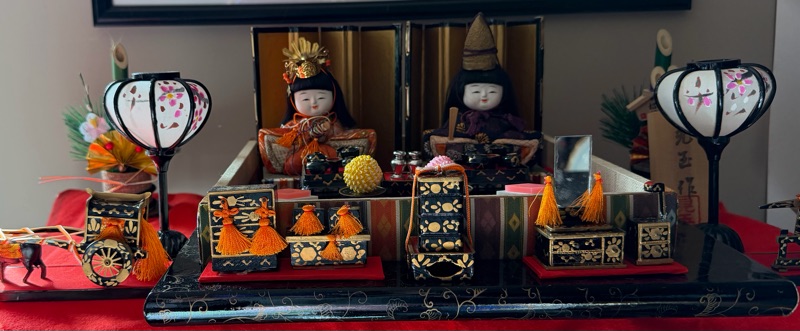
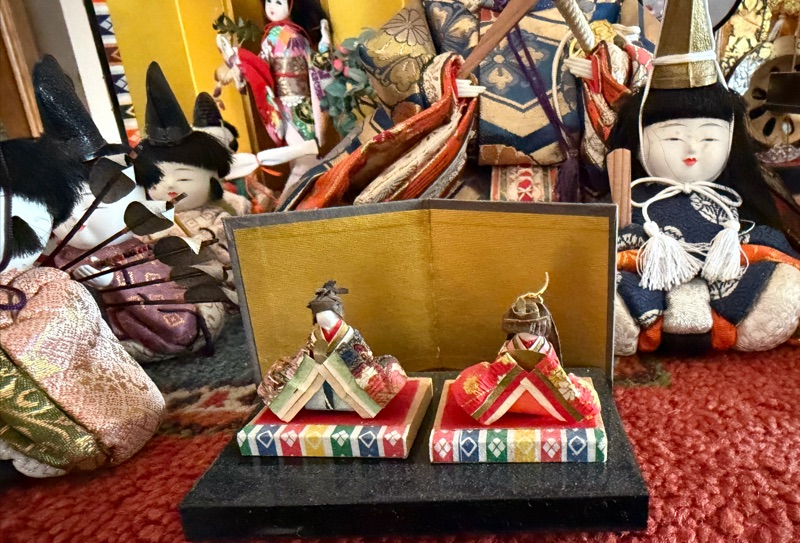
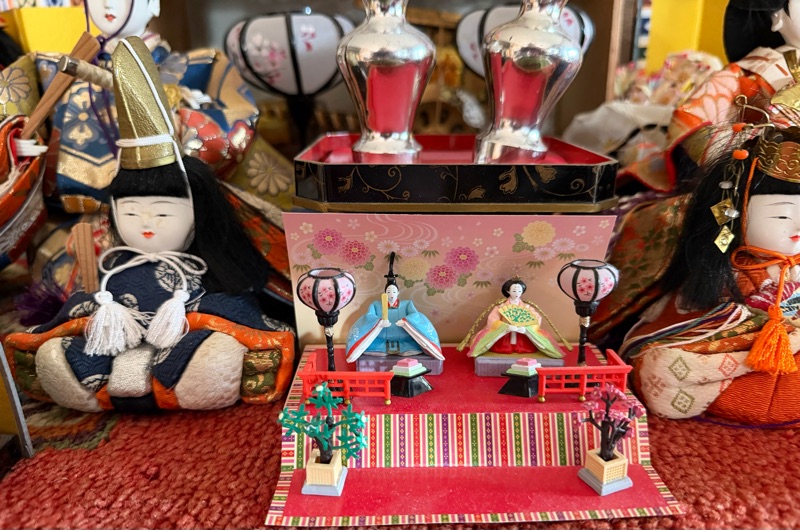
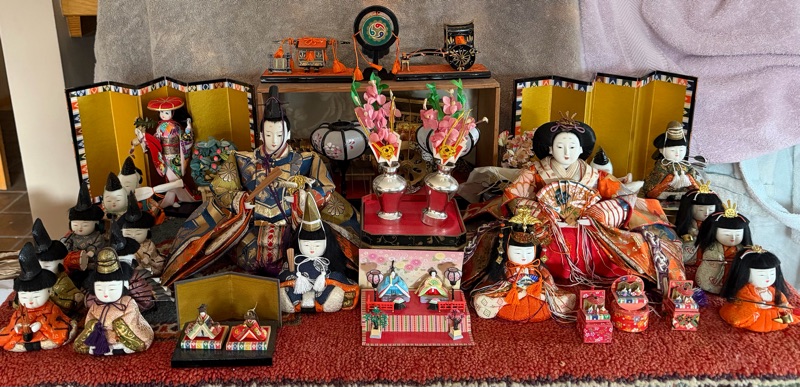
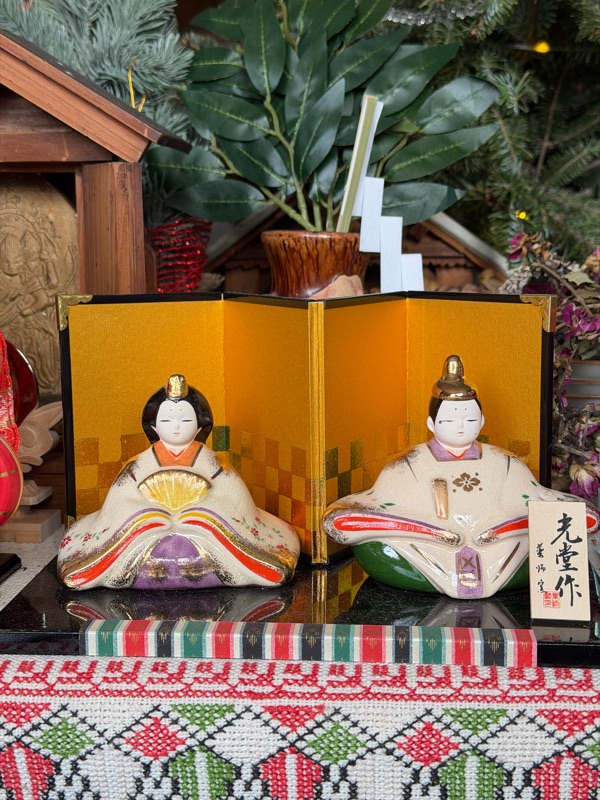 One of my own favourite festivals so sharing some Hina displays here. Traditionally they depict the Emperor and Empress. They can be accompanied by members of the court and traditional objects including carts and palanquins.
The Mikoshi … precisely where Kai told me it would be!
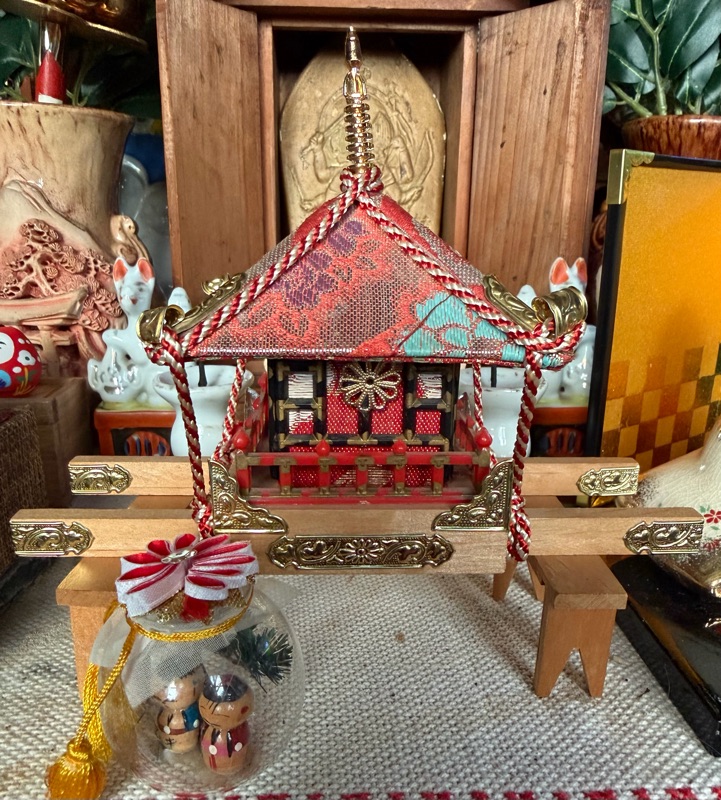
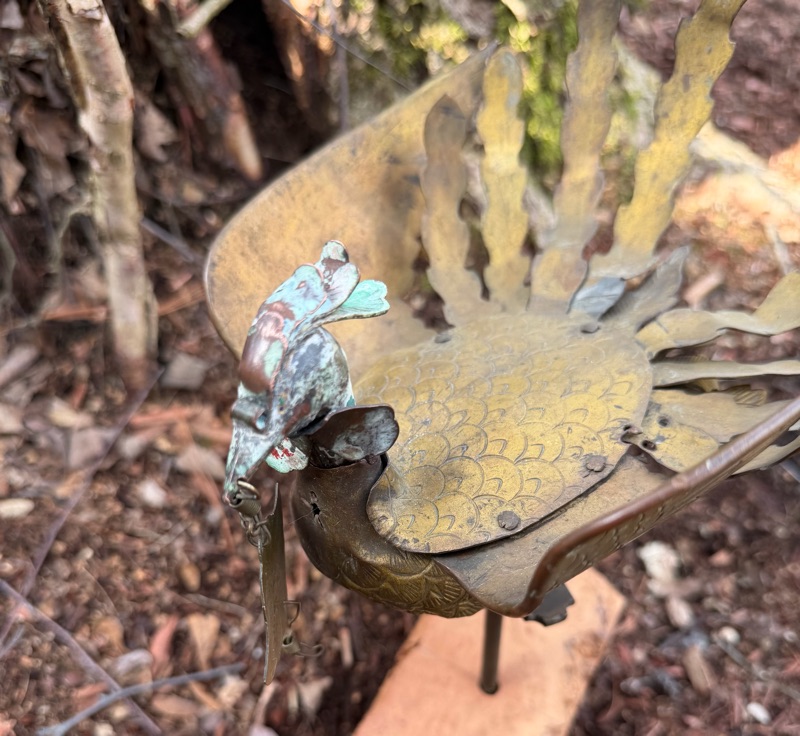
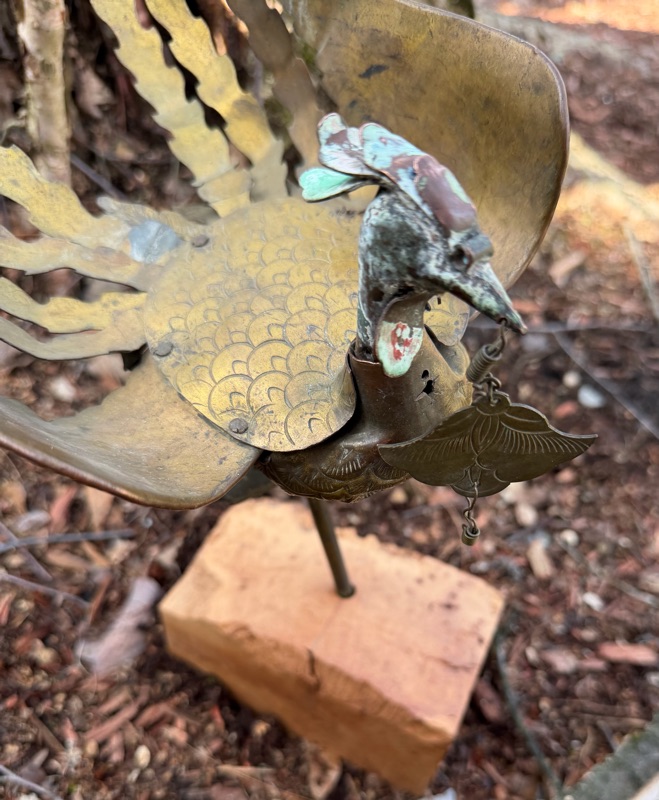
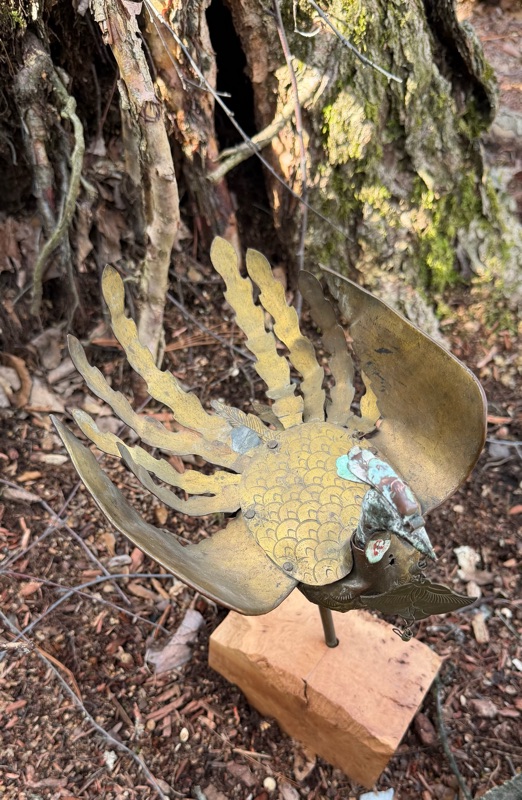
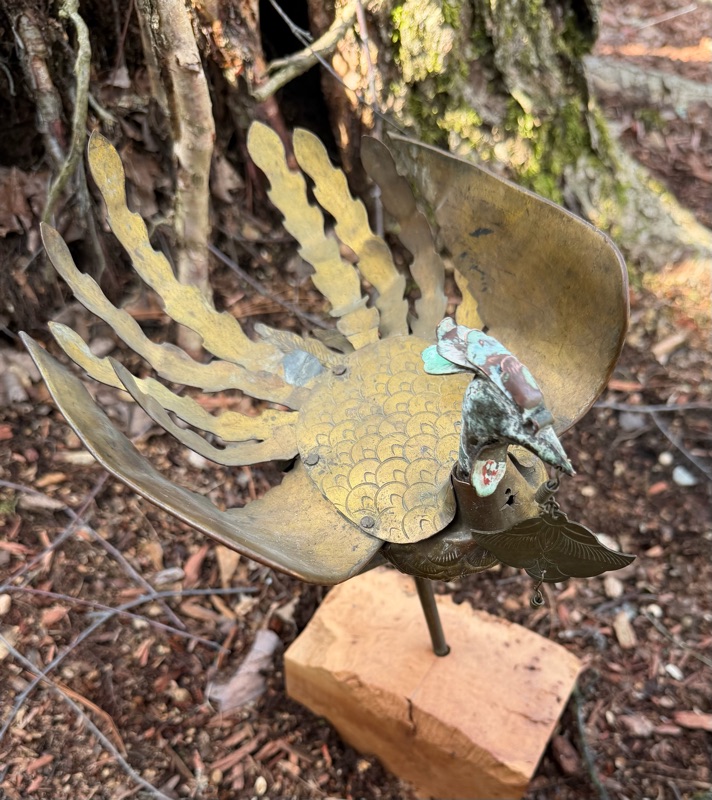
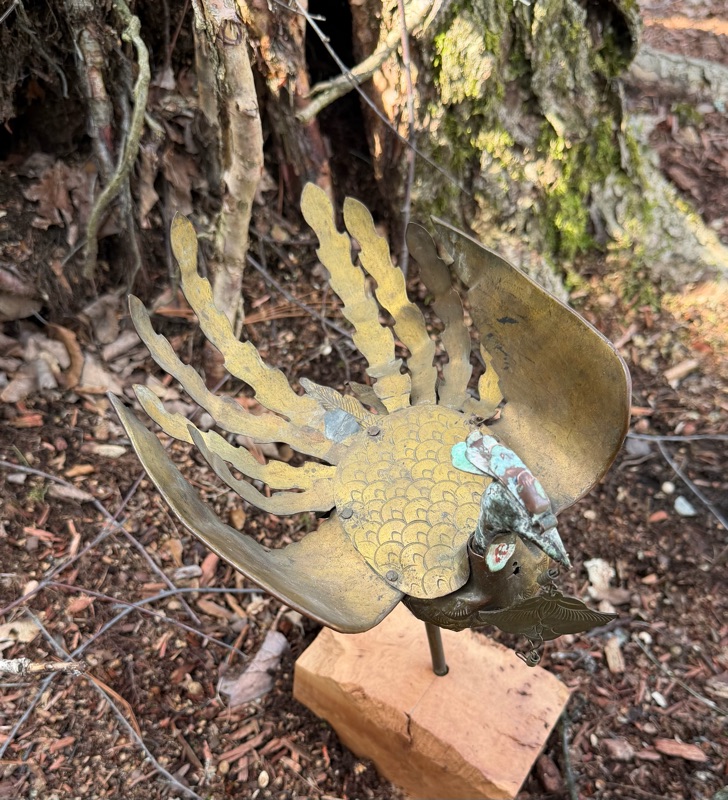
And here is something I consider to be very special: an antique Mikoshi decoration in the form of a bird. The former owners said it was a phoenix but to me, it is Kurama before he was knocked out of the Mikoshi in the Melée.
I was told that these historic decorations seldom survived. When the festival ended, everything usually was destroyed.
I recall from my own childhood in Nepal and the great jatra at Chandeshwori that the chariot was fashioned anew each year. Some parts were used again and again but there were other pieces that needed to be crafted every year. The labour itself is a sacred act, not only of devotion but a sort of brief entrance into another realm.
It looks as though this bird was part of an actual melée. Damage is significant.