Traditional sacred Symbols in Japan, the Kagura Suzu Bells
‘Guardians of Azuma’ offers the opportunity to inhabit a traditional Japanese landscape and participate in some traditional acts of devotion at shrines as well as seasonal festivals.
It inspired me to return to my childhood love of Japanese culture and attempt to study symbols of power in more depth.
Here are some symbols with their meanings:
Sacred Bells:
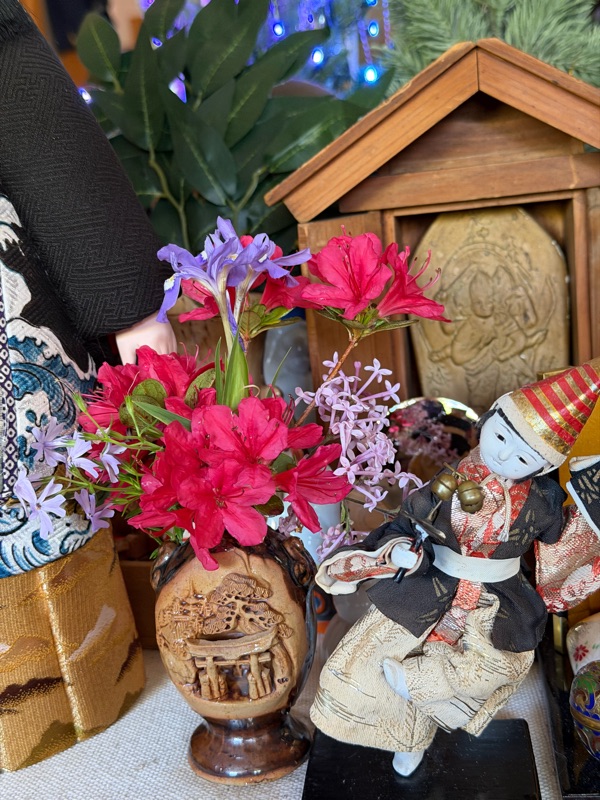
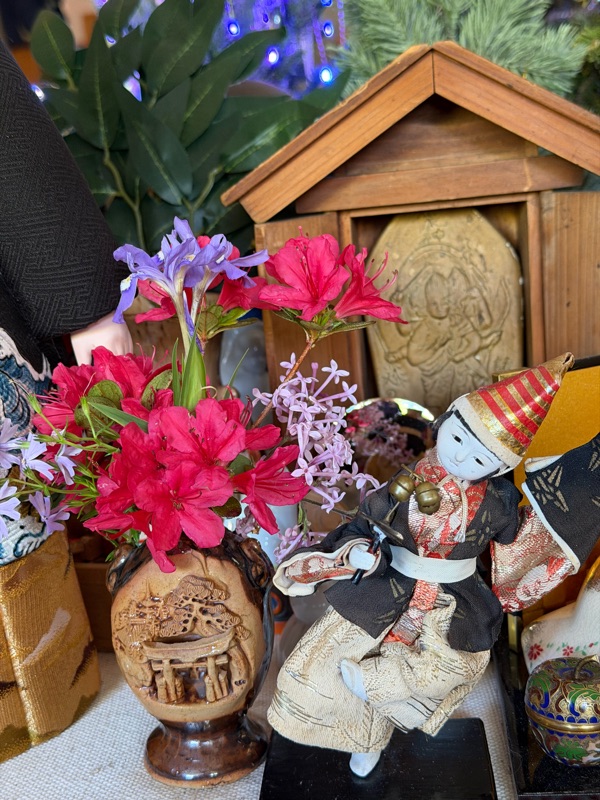
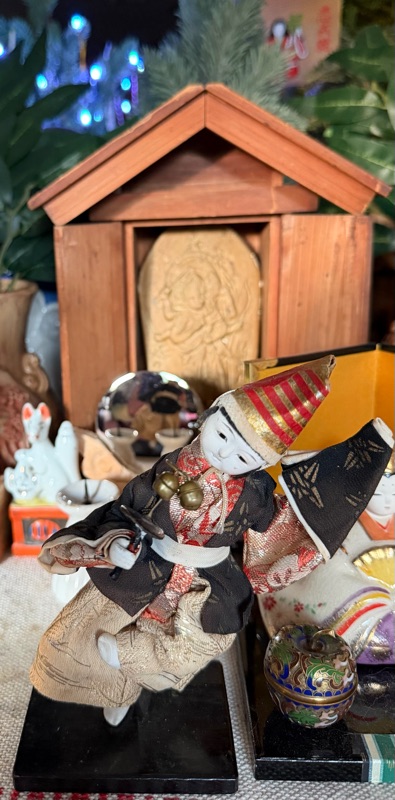
Kagura Suzu and Sanbaso:
Sanbaso is a famous dance both in Kabuki and Noh derived from the ancient Okina play to offer prayers for peace, safe travel and rich harvests (gokoku hojo)
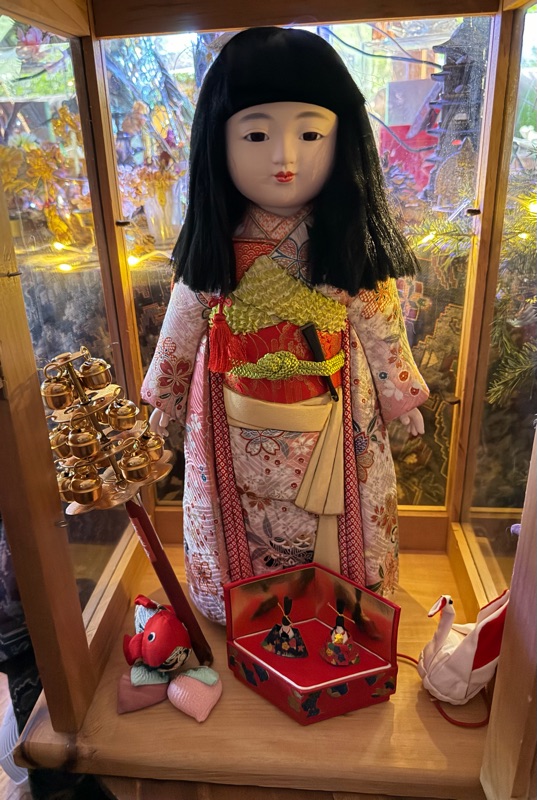
The Kagura Suzu is a very special set of bells on a wand that are an integral aspect of a sacred Kagura dance.
A male Sanbaso doll drives away evil, invites good fortune and is a symbol for a plentiful harvest or large fishing catch. They are used, especially in hanging displays of Hina doll sets to give healthy growth and future happiness to children.
The male Sanbaso portrays the ‘third man’ in the Okina performance, known for rhythmical intense dancing, sometimes with a white masque or tongue sticking out.
Costumes often feature black, white or chequered patterns.
A female Sanbaso doll is a Sarashi Sanbaso.
Sometimes they are part of a tsurushibina or hanging display for the Hinamatsuri Festival.
In the hand of a female Miko, it is often linked to the myth of the goddess Amenouzume who used a Sakaki branch in her famed dance to bring the Sun god Amaterasu out of the cave where she was hiding.
In Shrine dances, the wand holds 15 small bells arranged in three tiers: 3 at the top, then 5 and at the bottom, 7… all auspicious numbers and the bells are the vehicle by which the Kami is summoned. It is thought that the bells represent the fruit of the Ogatama tree.
The wand often includes silk ribbons in five colours: purple, white, red, yellow and green representing the five directions and the five sacred aspects of the soul.
A female Sanbaso doll summons Light and Joy, the return of the Sun from darkness of the cave. It is an amulet of good fortune and the Suzu bells purify the area and bring spiritual cleansing.
The miko Kagura Suzu dance is seen primarily at the New Year.
According to legend, these bells are linked to a goddess who dances before another Goddess and the only male is the brother of Amaterasu who was her reason for hiding in the first place. Ironically, however, it appears that the first dances using Kagura Suzu bells were performed by male Sanbaso dancers. They were part of Kabuki and Noh performances when thus seen. The bells always represented the original sacred Sakaki branch from the legend.
I will try to find out precisely when the miko dance using the Kagura Suzu bells first was recorded but I doubt that date would be significant as all that I have read suggests the female Sanbaso Miko Kagura Suzu dance was part of the most ancient Shinto traditions and very flexible in its performances. The female Shrine maiden holding the Kagura Suzu bells would have been a shaman with power. The bells would act to summon the divine power that then would use her as a vessel to make prophecies as well as perform other shamanic rites.
It was part of a great folk tradition wherein temporary stages would be erected on n a village near the Shrine and travelling performers then would entertain the villagers with old tales that would last for three or four hours and often include rites of healing and prophecies before the troupe left for their next destination.
According to books and articles I have read, this tradition remains active and vibrant in parts of Japan. It is very different from the commercial elegant Kagura Suzu dances performed at famous shrines for tourists.
In fact, although Japan has been rather remarkable in reconciling diverse religions and then incorporating them in contemporary practices in each period of history, the Kagura Suzu dances performed by the female Sanbaso appears to be a genuine very ancient shamanic rite and frowned upon no doubt when the government became determined to control religion and discourage the independent voices that distinguishes shamanism everywhere throughout the world and history.
Japan, like most nations, has a long history of violent power struggles. To allow shamans to make public prophecies at times of great civil unrest would have been very disruptive potentially, especially if an emerging powerful lord was willing to pay the shaman to tailor all visions to his ambitions.
Unfortunately, I am not fluent in Japanese. If I were, I would seek out written confirmation l, however meagre to support my view. What I do know is that people are much the same everywhere and independent voices, especially when apparently backed by the gods, often are perceived as dangerous threats to organised religion and governments.
In fact, at the very heart of the ancient legend is the act of a female goddess who did something prohibited by offering her brother sustenance that came from her own body. Repulsed and enraged, his response was so devastating that she fled. As the Sun goddess, hiding deep in a dark cave would have had catastrophic effects for the Earth and lack of sunlight would have caused widespread famines no doubt.
According to the same legend, it was another female who solved the issue by dancing with the sacred Sakaki branch in her hand and at some point, cresting a comedic moment by exposing her own private parts.
Japan has not been shy where ‘private parts’ are concerned, especially in terms of the phallus. I believe there still is at least one festival where huge images are carried on Mikoshis. After all, it is the ultimate symbol of fertility and although not that explicitly honoured in many other cultures, any pole whether Maypole or sacred pillar is a depiction of the same power.
What then was the sustenance so generously provided by the Sun that was rejected forcefully by her brother? I would imagine it would have been milk. Now, if you are brought up in a culture where ‘God’ is all-powerful and infinite, you will not understand Shinto traditions and beliefs at all. In the Shinto traditions, gods are more like humans with specific powers that elevate them slightly above humanity but as likely to commit sins or crimes or make errors as we are. As gods, they hear the prayers that are related to their specific divine powers and can answer them but fundamental to the entire Shinto system is the concept that cleansing and the restoration of purity is a constant need.
I remember from my own childhood that the Gods in Nepal are offered food. Traditional daily Shinto offerings include rice and sake. Obviously this is mere speculation on my part, but what if the Sum goddess was attempting to provide necessary sustenance for her brother and all that was available was the sustenance her own body generated? To me, the legend then has a potentially real foundation. We have seen again and again how events that were labelled legends have been shown to be based on real events. Famously, to offer two examples, throughout the world evidence to support the ‘myth’ of the great Flood has been discovered and the Trojan wars were historical events.
In any case, conceiving my own project to link the game ‘Guardians of Azuma to real Japanese traditions brought me to many intersections between legend and fact.

I believe that every one now has the information backwards. Most searches for details about the Kagura Suzu dances declare it originally belonged to make Noh and Kabuki traditions but I would stake my soul on it being originally a shamanic rite enacted by a maiden to enter a trance wherein the gods would speak through her and offer healing as well.
Japan has a long history of male performers who assume female roles. This is no different from European theatre that originally prohibited the inclusion of actual women actors and indeed the roles of Shakespeare’s female characters initially were performed by men. Historically in Japan as well as Europe, there were periods when female participation in performances actually was prohibited.
Now women are participating and many contemporary Nihon Buyo schools accept women as students.
As I wrote in another post, in the game ‘Guardians of Azuma’ you can choose to play either as a male or female but your role is the same for both: you are an Earth Dancer with special powers that need to be employed to restore and save the land from total annihilation by something known as the Celestial Collapse. Like the Great Flood in other myth cycles throughout the world, this is an event deliberately initiated by the Divine to sweep the world clean and start a new cycle. You have been given the ability and duty to work to restore life to the seasons and power and motivation to gods and humans alike so that this destruction can be averted.
Initially, you are given a Red plum branch and taught a Sacred Dance known as the Dance of Bonds. His dance essentially serves to activate power in various objects including Dragon Statues that allow you to save your progress. As you continue to play, you will be given a Sacred Treasure by each of the Seasonal and Elemental gods. The first of these, a Sacred Taiko Drum is entrusted to you by the Goddess of Spring. By performing a sacred Dance with this Drum you can restore life to dead trees and withered crops and perform healing rites.
The sacred drum in this game reminded me of my great love of drums and drumming. I began a search for a drum like the one in the game.
I have collected a few drums over the decades but although I had two-headed drums, none were like the beautiful Japanese drum held by female Sanbaso dolls.
Oddly enough, female Sanbaso dolls are shown more often with a fan and drum than a set of Kagura Suzu bells.
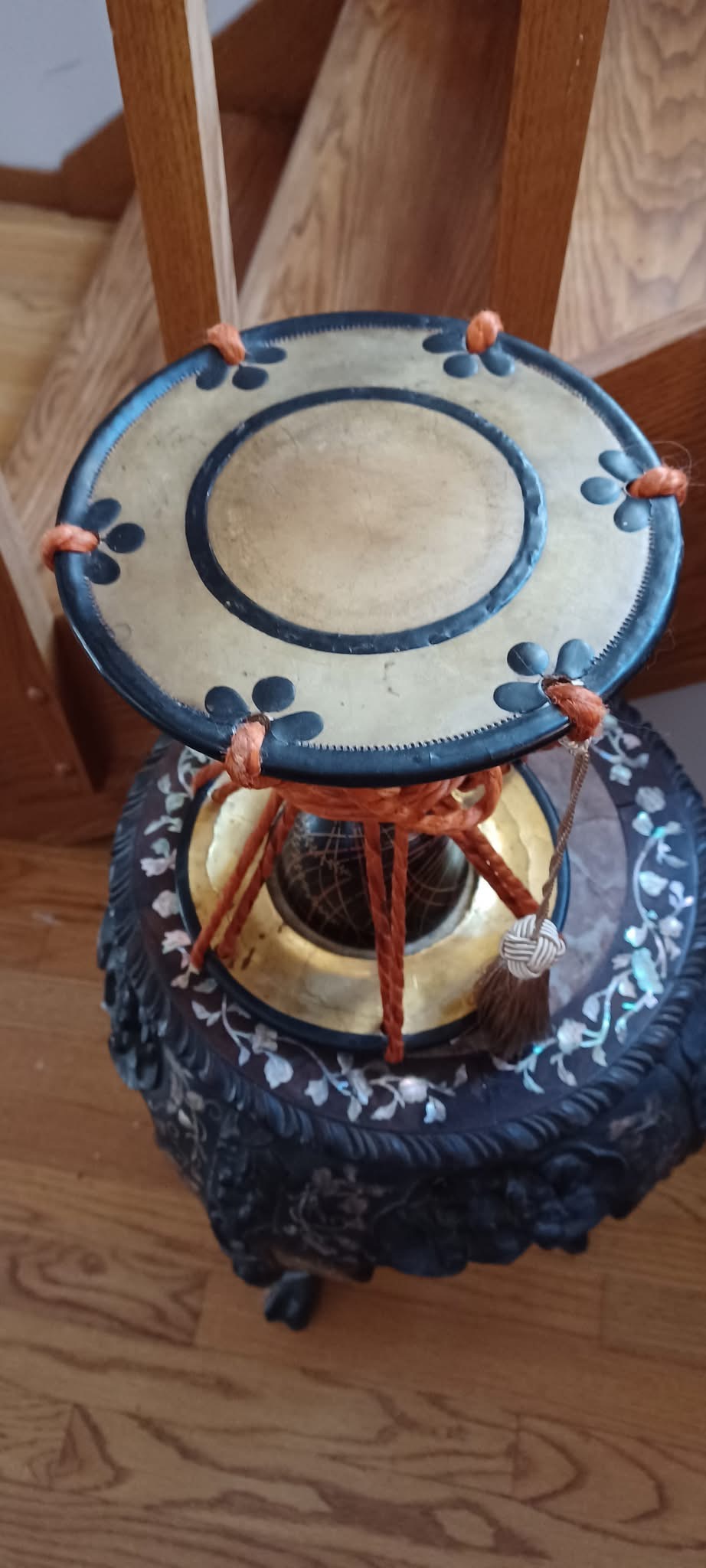
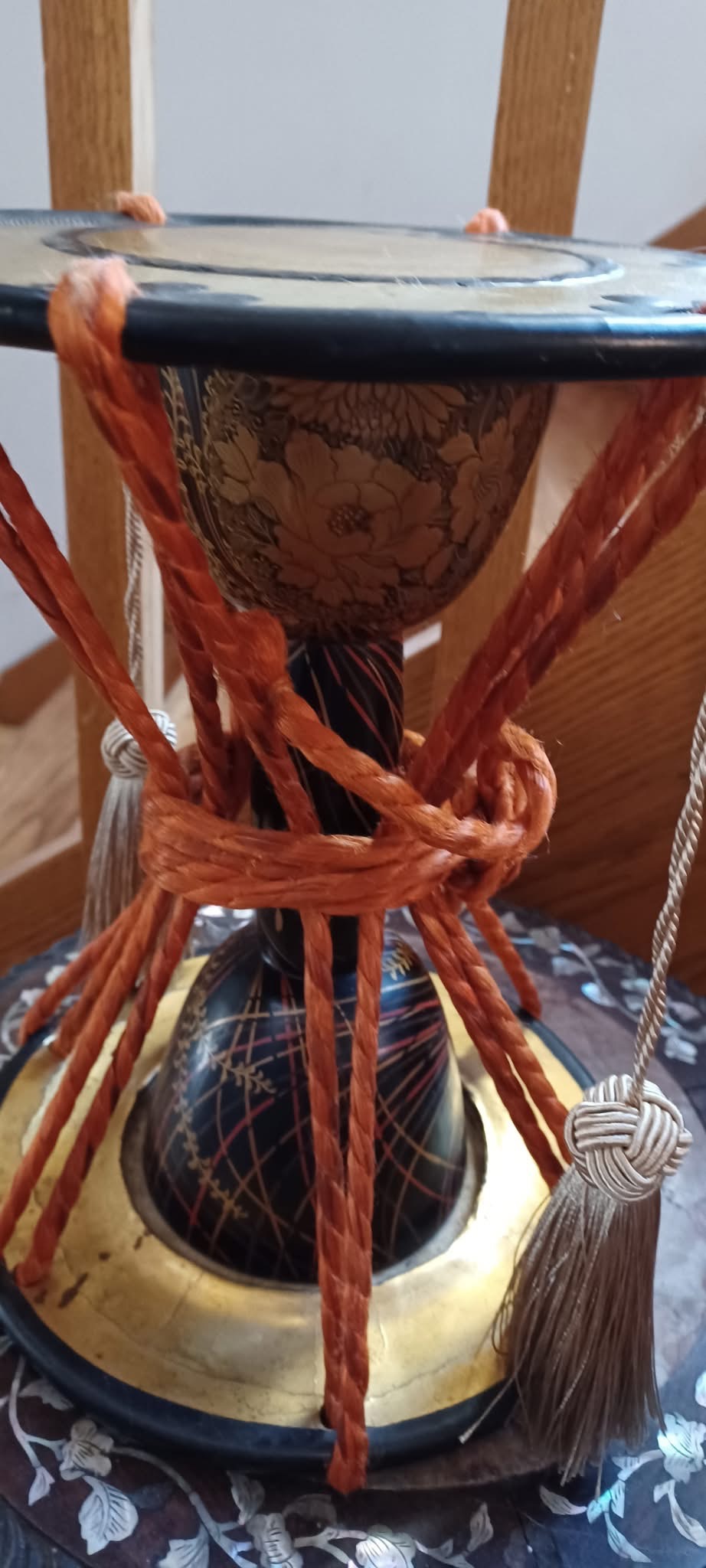
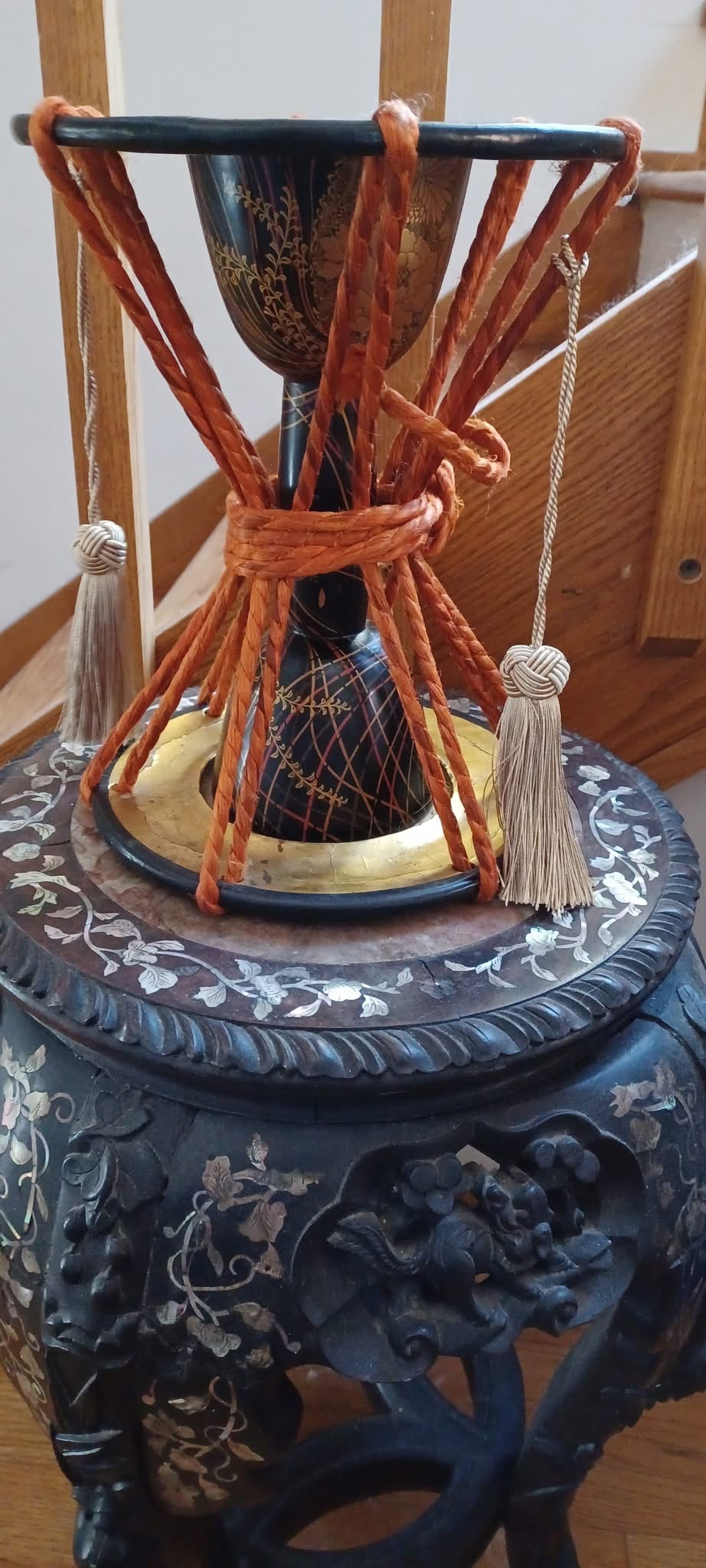
I did find a vintage drum that spoke to me eloquently. Little did I know then that my quest had just begun.

This is my other post about the Kagura Suzu traditions:
https://freyashawkguardiansofazuma.blogspot.com/2026/05/the-kagura-shrine-in-japan-and-kagura.html


